
Syed Abbas Ali (Abby)
Full Stack Developer · Delhi, India
ALP Buildcon: from 8-second load time to under 1.4 seconds.
ALP Buildcon came to me through a referral. Their old website had been built 3 years earlier by a local agency, and nobody had touched it since. The brief was vague: 'make it better.' After about 20 minutes of looking at it, the problem was obvious — it was loading 18MB of images on the homepage, had no mobile layout to speak of, and the contact form had been broken for who knows how long.
Here's what the rebuild actually looked like.
The diagnosis: what was actually wrong
Before writing a single line of code, I spent a day auditing the existing site. Google PageSpeed Insights showed a Performance score of 31 on mobile. The Largest Contentful Paint — the metric that measures when the main content appears — was 9.4 seconds.
The images were the biggest problem. The hero image was a 6MB JPEG, full resolution, no compression, no modern format. Every project image was the same. The site was essentially sending a photography portfolio's worth of data on every pageload.
The second problem: no clear conversion path. The most important thing on a real estate developer's website is getting a potential buyer to call or fill out an enquiry. The contact button was hidden in the footer. On mobile, there was no fixed CTA at all.
"The contact form had been broken for at least 6 months. Nobody on the client side had noticed because they were getting enquiries through word of mouth. We were just leaving conversions on the table."
— Post-audit finding
What we built and why
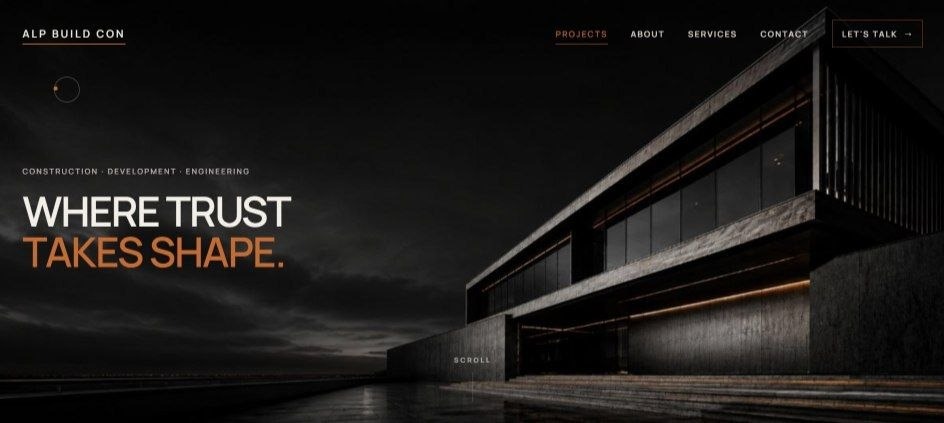
The stack: Next.js 14, TypeScript, Tailwind CSS, deployed on Vercel with a CDN edge network. For the images, we converted everything to WebP and AVIF using Next.js Image — the browser picks the best format it supports automatically. The 6MB hero image became 340KB. Every project thumbnail went from an average of 2MB to under 80KB.
For the project gallery, I built a filter interface that lets visitors switch between residential and commercial projects without a page reload. This sounds simple but it required some thought about how to structure the data — the previous site had no filtering at all, just a flat scrolling list.
The mobile experience got a complete overhaul. Sticky call and WhatsApp buttons, a project inquiry form that actually submits, a working project image lightbox that works on touch screens.
One thing that nearly caused a problem: the client's project images were scattered across two different Google Drives and one Dropbox. It took half a day just to collect and organise the assets before we could optimise them.
What actually happened after launch
I don't love the '3x results!' style case study writing — it usually means someone picked the best-looking metric and ignored everything else. So here's the full picture.
Mobile Performance score: 31 before, 97 after. That's real and consistent across multiple audits.
The contact form started getting submissions on Day 1. The client said they received 4 enquiries in the first week, which they described as more than they'd gotten from the website in the previous year combined. I can't verify that claim independently, but that's what they told me.
WhatsApp click-throughs increased significantly — we added a floating button that wasn't there before, so this was largely additive rather than a conversion improvement.
The one thing that didn't change as fast as expected: organic search traffic. SEO takes time. We set up the technical foundations correctly, but ranking improvements happen over months, not days.
The honest part: what I'd do differently
The project gallery filter I built works well, but I built it in a way that's slightly harder to maintain than it needed to be. The data structure for projects is a bit tangled — if I was starting fresh, I'd separate the project metadata from the display logic more cleanly.
I also underestimated how long the asset collection and optimisation would take. I built that time into future project estimates after this one.
Final thought
The ALP Buildcon project is a good example of what 'website improvement' actually looks like in practice: less about dramatic redesigns, more about fixing the things that are quietly killing your conversion rate. If you're not sure whether your website is costing you business, I can audit it and give you an honest answer in a couple of hours.
Syed Abbas Ali(Abby)
Full Stack Developer & Web Architect based in Delhi, India. 3+ years building websites and web applications for founders, startups, and growing businesses. I handle everything: design, frontend, backend, and deployment.
READY TO BUILD SOMETHING?
Full stack engineering, clean code, 6–7 day delivery. Let's talk.